Another innovation in the field of education is the neuroadaptive learning systems, in which the technology is in direct contact with the human brain and can be used to customize learning experiences. These systems have the ability to modify content, pace and difficulty within seconds using real-time neural data to produce a profoundly personalized learning experience. This new technology is a mix of neuroscience, artificial intelligence, and high-tech sensors that will transform the way knowledge is presented and learned.
What are Neuroadaptive Learning Systems?
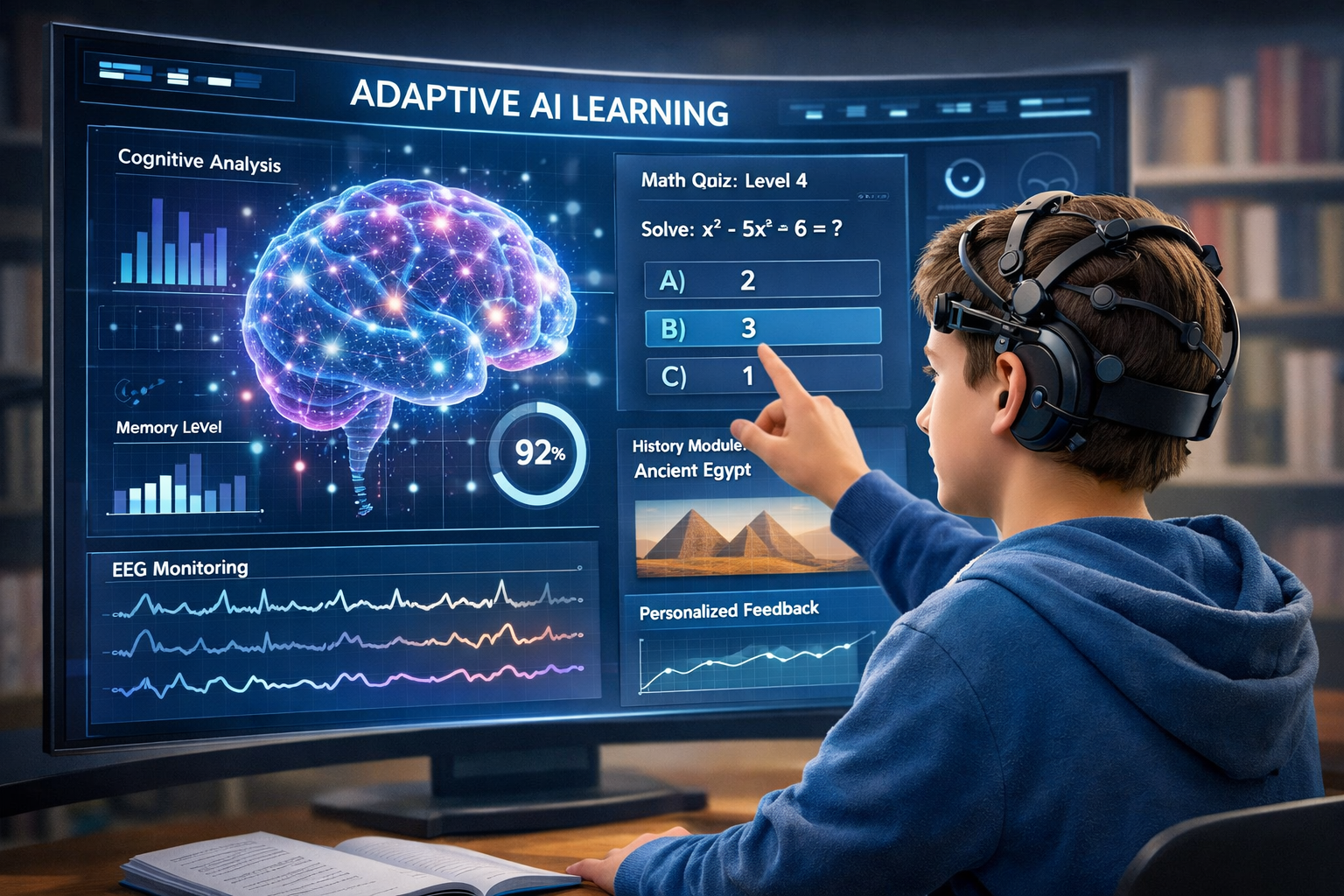
Neuroadaptive learning systems are learning environments that track brain activity typically by measuring EEG (electroencephalography) or other technologies, and adjust learning material based on this activity. Neuroadaptive systems do not use behavioral data such as clicks and performance scores like traditional adaptive systems do, but rather interpolate cognitive states such as attention, stress, and engagement.
How They Work
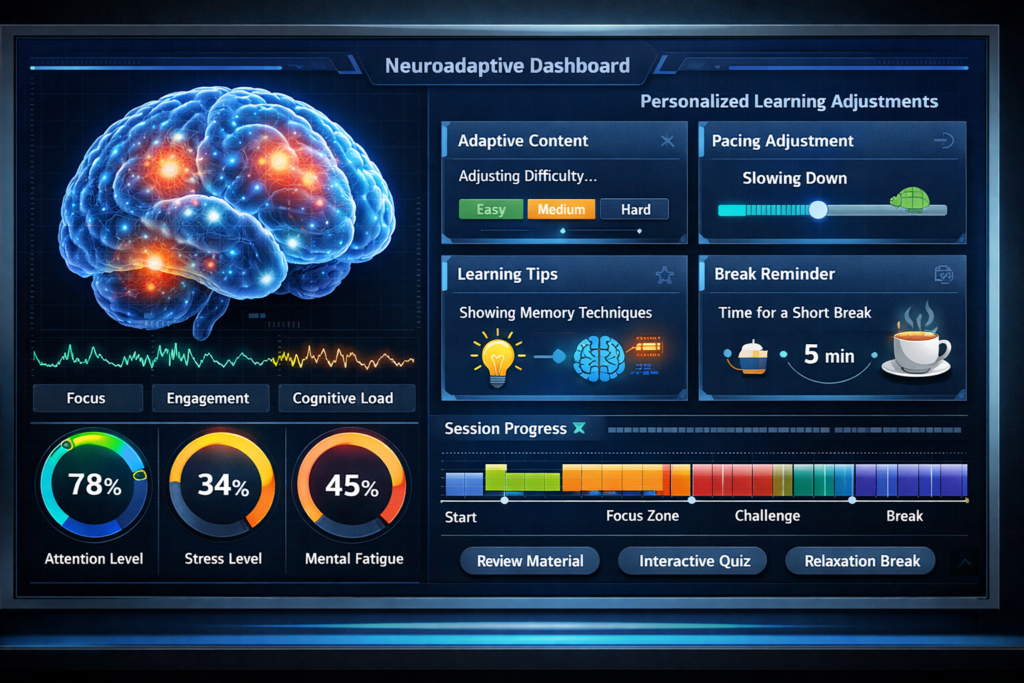
Neural signals are captured in wearable devices using these systems. This information is then processed by artificial intelligence algorithms in real time, where patterns are discovered to show whether a learner is paying attention, lost or even tired. The system, based on this information, alters the learning experience- may be by simplifying a concept, including a break or altering the teaching style.
Basic Systems Technologies.
- Neural signals capture Brain-computer interfaces (BCIs).
- Brain data interpreting machine learning models.
- Live control of content through feedback loops.
- EEG headsets and other wearable neurotechnology devices.
- Cloud computing to process data and to scale.
The main advantages of Neuroadaptive Learning.
Neuroadaptive systems have a host of benefits that have the potential to greatly enhance the outcome of education.
Enhanced Personalization
Conventional education tends to be one size fits all. Neuroadaptive systems take this a step further by adjusting lessons to the cognitive state of a learner to make sure that they engage and understand optimally at any given time.
Improved Learning Efficiency
The system can be able to step in promptly by identifying when a student is having some difficulties or is losing attention. This saves time wasted and makes the learning process speedy.
Reduced Cognitive Overload
The system can be used to monitor brain signals to determine when the learner is overwhelmed. It is then able to alter the level of difficulty or offer supportive materials to ensure a balance.
Real-Time Feedback
Students are provided with real-time feedback regarding their responses as well as their intellectual activity. This creates a more interactive and responsive learning experience.
Accessibility and Inclusivity
Learning with neuroadaptive can also be particularly valuable to students with learning differences as they can learn in a manner that complies with their cognitive patterns.
Modern Education Uses.
The possible uses of the neuroadaptive learning systems are transformative and tremendous.
Classroom Integration
In the classrooms of the future, students can have lightweight neuro devices that can be linked to a central learning system. Educators will get information on the level of engagement in the classroom, and may change their approach to teaching.
Corporate Training
Neuroadaptive systems can be utilized by organizations in order to improve employee training programs. The companies can enhance the acquisition and retention of skills by making its content specific to each cognitive state.
Distance and Web-based Education.
The neuroadaptive systems have the ability to connect the physical and virtual classes in a digital learning environment by offering real-time personalization, which resembles the interaction between humans.
Difficulties and Moral Issues.
Although they have potential, neuroadaptive learning systems bring about significant concerns that need to be addressed.
Data Privacy
Brain information is very sensitive. To ensure the trust of users, it is important to make sure that neural information is stored in a secure place and used in a manner that is ethical.
Accessibility and Cost
State-of-the-art neurotechnology may be costly, and this may be a barrier to poorer populations.
Accuracy and Reliability
It is complicated to understand brain reads. The wrong readings may result in improper modifications of learning materials.
Ethical Boundaries
The extent to which technology has the power over human cognition is a concern. There must be clear ethical guidelines.
What is the Future of Neuroadaptive Education?
With the ever-changing technology, it is projected that neuroadaptive learning systems will be more precise, cheaper and mainstream. Even deeper immersive learning may be created with integration with virtual reality and augmented reality. Over the long run, education could become more individualized as learning becomes totally personalized and directed by real time brain data.
Such a change might result in a world in which learning is more effective but also more in line with the natural workings of the human brain.
Conclusion
Neuroadaptive learning systems are a very important indication of a new era of education. These systems provide unmatched individualization, effectiveness and interaction by acting directly on brain signals. Although the issues concerning ethics, privacy and accessibility are still present, the opportunities offered by it make this a promising area of innovation in education. With the progress of research and technology, neuroadaptive learning has the potential of fundamentally transforming the way we learn and teach.
Frequently asked questions (FAQs)
1. What is neuroadaptive learning?
Neuroadaptive learning is a learning method whereby the brain signal information is employed to modify the learning content, in real time, to make it more personalized and engaging.
2. In these systems, how do we measure brain signals?
Wearable technologies, such as EEG headsets, are used to typically measure brain signals in response to electrical activity in the brain.
3. Does neuroadaptive learning have a safety profile?
Yes, the majority of systems have non-invasive technologies. Nonetheless, privacy of data and ethical concerns should be well taken care of.
4. Who will be able to gain by neuroadaptive learning?
All students are able to benefit, particularly those with learning differences or special cognitive needs.
5. What will become of this technology?
The future holds further incorporation with AI, virtual reality, and application in schools, universities, and corporate training.