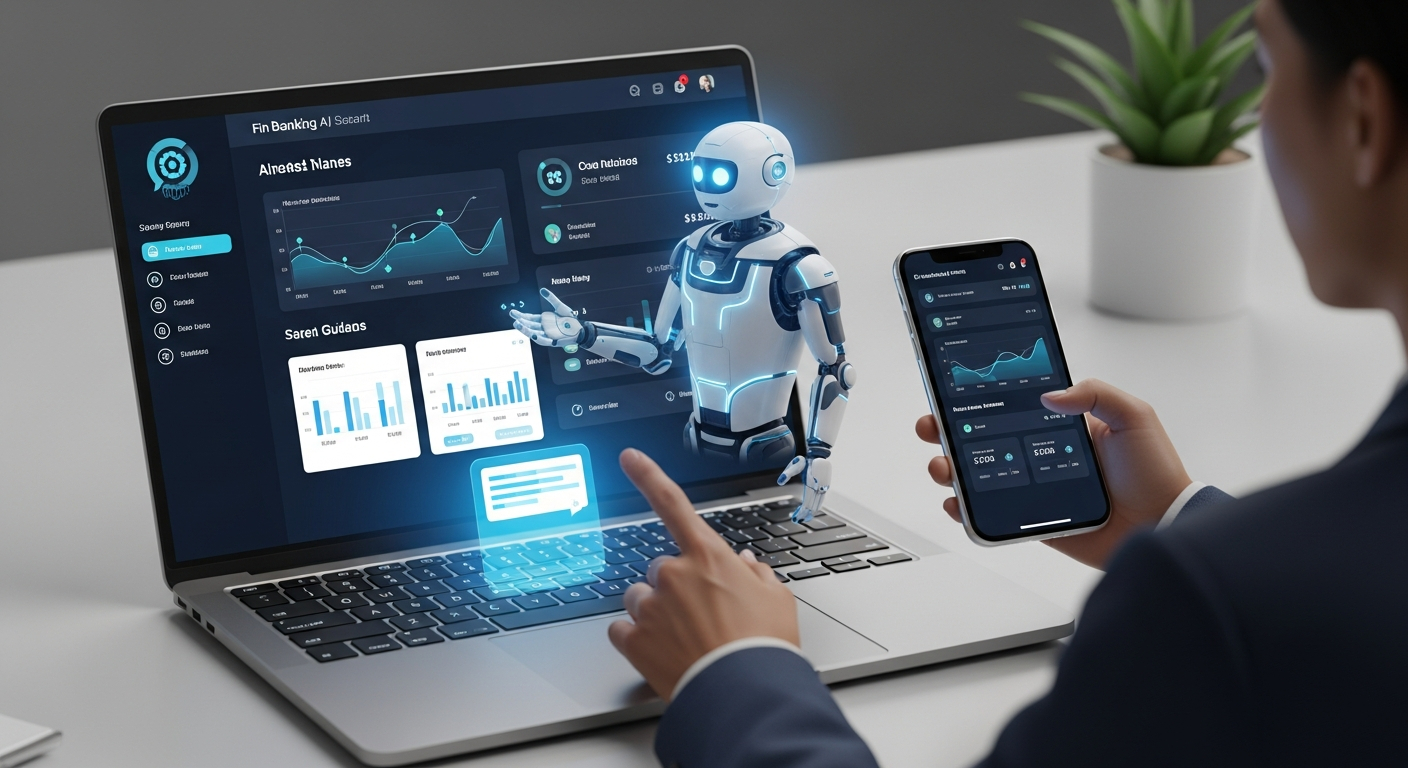
The agentic commerce can be seen as a significant development of the digital economy where the artificial intelligence ceases to help users but makes decisions on their behalf as well. Users do not need to go through products manually, comparing prices, and making purchases; instead, AI agents can do everything. These systems are fast, precise and highly personalized and are changing the way consumers and businesses interact in the market.
What does Agentic Commerce mean?
The agentic commerce is a framework where artificial intelligence agents are used to conduct commercial transactions like product discovery, price search, bargaining, and the execution of transactions. These agents employ the best algorithms, real time data and behavior to make a decision that is more aligned to the user preferences or business objectives. In contrast to the conventional e-commerce where a user has to input information at every stage, agentic commerce reduces human participation as AI is allowed to act on their own and proactively.
The functioning of AI Agents in Business.
Autonomous Decision-Making
The AI agents are structured to handle large volumes of data, such as user preferences, previous behavior and the market conditions. This information enables them to make smart decisions, which can be enhanced with time as they engage in a process of constant learning. This helps them to choose products, vendors and also optimize on purchasing strategies without the need of inputting them manually.
Real-Time Negotiation

Among the most formidable features of agentic commerce is the fact that AI agents are able to negotiate on-the-fly. These agents are able to interact with other systems or platforms in order to dynamically adjust prices, delivery schedules and service conditions. This means that users and businesses will always get the best deal depending on prevailing circumstances in the market.
End-to-End Execution
AI agents take care of the whole process of transactions, including the identification of requirements, payments, and monitoring of delivery. This smooth operation eliminates the tension in the purchasing procedure and to a great extent boosts the efficiency, thus making the transactions quicker and more dependable.
The main characteristic of Agentic Commerce.
The reason agentic commerce is special is due to the fact that it integrates intelligence, automation and flexibility into a single platform. These characteristics enable it to be very efficient and scalable across industries:
- Self-Learning Systems: AI is constantly learning through performing previous decisions and results.
- Proactive Actions: Agents predict needs and preempt the actions of users.
- Never-ending Optimization: Pricing, sourcing and strategies are constantly improved.
- Interoperability: Works seamlessly across platforms, devices and services.
- Real-Time Intelligence: The decisions are made based on the up-to-date data and trends.
Advantages of Agentic Commerce.
Efficiency and Speed
The time that is taken to carry out the transactions is severely decreased by agentic commerce, since it automates the process of decision making and its implementation. Businesses can operate more quickly and customers can have a frictionless experience as what was once taking hours or days, can happen in seconds.
Hyper-Personalization
AI agents provide very personalized experiences as they are knowledgeable of individual preferences and behaviors. Such customization means that each recommendation and purchase is very close to user needs and enhances satisfaction and involvement.
Cost Optimization
Analyzing various options and negotiating on the spot, AI agents are able to obtain the most reasonable prices and avoid unwarranted costs. This is beneficial to the consumer who wants to get value and the business that needs to maximize its operation costs.
Challenges and Risks
Trust and Transparency
User trust is one of the largest problems in implementing agentic commerce. As AI systems can independently make financial decisions, users should be able to clearly understand the way in which the decision is made and why some choices were made.
Information security and privacy.
The agentic systems are based on sensitive personal and financial information. To have a high level of adoption and long term success, it is important to make sure that there are high levels of security and that this data is not breached.
Ethical Concerns
AI should be developed so that it works in an ethical manner and should not be biased or unjust in any deal. Companies should also be accountable and make sure that they follow the rules and regulations related to AI-based decisions.
Where Agentic Commerce is in Use.
The use of agentic commerce is already being applied to various industries, demonstrating its adaptability and possible effects:
- Retail Automation: AI takes care of the selection of products and automatic buying.
- Supply Chain Management: There is optimization in inventory and procurement processes.
- Financial Services: AI deals with payments, subscriptions, and investments.
- B2B Marketplaces: Automated contract management and negotiations.
- Smart Homes: The equipment arranges the necessities in real-time according to their use.
The Businesses in the Agentic Future.
AI-Ready Infrastructure
To facilitate agentic trade, companies have to invest in new infrastructure that can allow them to integrate AI. This involves creating APIs, enhancing data systems and making sure that there is a smooth connection of various platforms.
New Customer Interaction Models.
With the spread of AI agents as the main decision-makers, businesses will need to change their approaches to engaging with these systems as opposed to human participants. This will necessitate a change in the marketing, pricing and engagement strategies.
Communication between AI Systems.
Further trade will entail numerous AI agents communicating with one another on platforms. To achieve peak efficiency, businesses must be able to match these systems and ensure effective communication.
Conclusion.
The changes in agentic commerce are altering how transactions are made, allowing AI to perform on its own on behalf of individuals and companies. It is more efficient, personalized and scalable than any other, yet it also brings with it issues pertaining to trust, security, and ethics. How fast and successful these new model will transform the global economy will be dependent on how successfully they overcome these challenges.
FAQs.
1. What is agentic commerce simply put?
A system known as agentic commerce involves AI agents automatically buying, selling, and negotiating transactions without human intervention, thus providing a faster and more efficient way of conducting transactions.
2. What is the difference between agentic and traditional e-commerce?
In comparison to traditional e-commerce where the user has to act, agentic commerce enables AI to make decisions and transact business without requiring human input, which saves time and labor and enhances speed.
3. Does agentic commerce pose a safe experience to users?
It is possible to make agentic commerce safe provided that there are robust security measures and AI transparent processes in place, though such risks as data breaches should be addressed with caution.
4. Does AI negotiate better than humans?
AI may be more efficient at negotiation than humans since it may analyze a lot of data in a second and react to the changes in the market in real time.
5. What sectors will be the most benefacted in agentic commerce?
The retail, finance, supply chain, and B2B marketplace sectors are likely to be the most benefiting industries of agentic commerce because of its automation and optimization features.