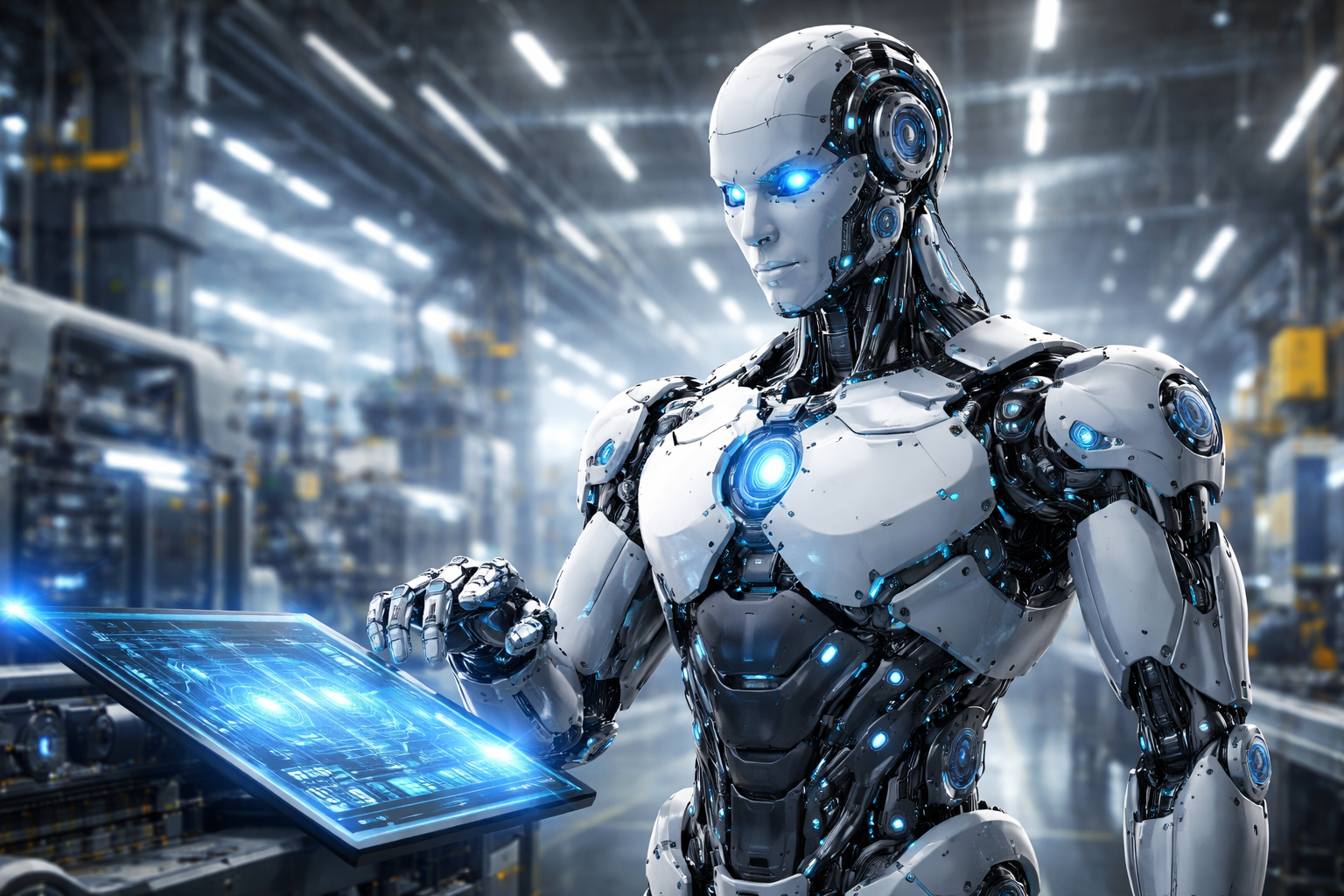
Artificial Intelligence is quickly creeping off the screen and the digital world into the real world where machines can sense, think, and act in real-world situations. This transformation is called Physical AI and is transforming the integration of technology into daily lives and industries. AI systems can now act in response to the environment in real time rather than just analyze data. In factories, as well as hospitals, Physical AI is helping create smarter, faster, and more efficient systems. This technology is becoming an essential aspect of contemporary development and automation as innovation proceeds.
What is Physical AI?
Physical AI is artificial intelligence applied to machines and devices acting in real-life scenarios. These systems are aimed at monitoring their surroundings, analyzing data, and acting on the information. Physical AI is a mixture of smart algorithms and material devices, unlike the conventional AI that is still confined to software and online applications. This integration enables machines to undertake activities that involve awareness, flexibility and accuracy in evolving situations, and so they are more applicable in real life situations.
Components of Physical AI.
- Data collection involves sensors that capture real world data including images, motion as well as environmental conditions, which assist machines to perceive the environment.
- The data obtained is processed by machine learning models which discover patterns and make intelligent decisions in real time.
- Actuators allow machines to physically act such as movement, lifting or adjusting objects according to decisions.
- With edge computing, data can be processed faster on the edge, eliminating delays and enhancing real-time responsiveness.
Physical AI in the Real World.
Smart Manufacturing.
Physical AI is changing the conventional production systems in manufacturing into intelligent and automated systems. Robots that have AI are capable of doing repetitive and complex jobs with high accuracy and consistency. These systems keep a check on operations, point out areas of inefficiency and streamline workflows in real time. This does not only enhance productivity but also leads to quality of product. Moreover, AI-equipped machines minimize the chances of accidents at the workplace, performing hazardous tasks, and industrial areas become safer to the human operator.
Autonomous Vehicles.
One of the most evident applications of Physical AI is autonomous vehicles. These vehicles operate high-tech sensors, cameras, and AI algorithms to drive along the roads and react to the situation on the roads. They are able to recognize traffic signs, identify roadblocks, and make judgments of driving without any human interventions. This technology enhances efficiency in transportation and minimizes human error. Autonomous systems will have a huge role in the logistics, delivery, and public transportation as they further develop.
Healthcare Robotics.
Physical AI is having a strong influence in the healthcare sector as it allows the creation of intelligent robotic systems. The robots help doctors to execute intricate surgeries with utmost precision and accuracy. They are also able to assist in patient care through checking of health conditions and also helping in rehabilitation. Healthcare systems driven by AI process vast quantities of medical information to deliver useful information, aiding professionals to make improved choices. This results in better patient outcomes and efficient healthcare services.
A Smart Home and a Smart City.
Physical AI implementation within homes and cities is making them smarter and responsive. In intelligent houses, AI systems can regulate the lights, temperature, and security automatically according to user actions and preferences. Physical AI is applied to traffic control in cities, decreasing energy use, and improving the safety of people. These systems enhance efficiency and ease in day to day life. Smart environments can be adjusted to the conditions and needs of users fast by relying on real-time information.
Agriculture Automation.
Agriculture is also benefiting from Physical AI through the use of intelligent machines and automated systems. AI-based tools can enable farmers to track the health of crops, control irrigation, and streamline the harvesting process. Such systems process environmental information like soil quality and weather patterns in order to enhance decision-making. This has led to an increase in productivity as well as minimization of manual labor and wastage of resources. Physical AI can be used to develop more sustainable and efficient agricultural methods.
Advantages of Physical AI.
Increased Efficiency.
Physical AI enhances productivity by enabling machines to work fast and with high precision without becoming tired. These systems are capable of working round the clock and guarantee a steady production and minimize delays during operations. It enhances productivity and streamlines work by businesses, resulting in higher performance and development.
Enhanced Safety.
Physical AI is particularly effective in increasing safety because machines can handle the tasks that can be hazardous to people. In sectors known to have many accidents, AI-driven systems minimize human exposure to hazardous environments. This not only safeguards workers but also assists organizations to have higher standards and compliance of safety.
Real-Time Decision Making.
Real-time decision making is one of the major benefits of Physical AI. These systems can react fast to adaptable environments by processing data in real-time. The ability is crucial in situations like driving, production and healthcare where fast decision making can greatly influence the results.
Cost Reduction.
Implementation of Physical AI saves costs in the long term, though it will demand an initial investment. Automation decreases labor costs, errors and enhances resource management. In the long term, AI-powered systems will enable businesses to become more efficient and profitable.
Conclusion.
The next step in technological development is physical AI. It is enhancing efficiency, taking the intelligence into the real world and is redefining human-machine interaction. Even though difficulties exist, the opportunities are much more beneficial than the risks. With ongoing innovation, Physical AI will be at the center of the future of our connected and automated world.
FAQs.
1. What is Physical AI simply put?
Physical AI refers to artificial intelligence applied in machines that have the ability to interact with the real world and as such perform tasks automatically.
2. How is Physical AI different from traditional AI?
The traditional AI is digital and the Physical AI is real-world and uses hardware and sensors.
3. What is the current use of Physical AI?
It is applied in such industries as manufacturing, healthcare, transportation, agriculture, and smart infrastructure systems.
4. Is Physical AI safe?
Physical AI could enhance safety, yet it needs appropriate regulations and responsible application to prevent the risks.
5. Will physical AI take over human jobs?
Certain tasks can be computerized and new positions will be created that need highly skilled workers with technical expertise.

.png?Expires=1832660143&Key-Pair-Id=K2ZIVPTIP2VGHC&Signature=i~SOqdmg~3l7X5NV5jCAMvA9EuQZkxKM8viI962LqNIxCzxhtudVyrTvSCSjWjI85iU1DDlRWMcakFXW0aiNI1v5N7Yzm2Foxp3hoJ-WV1PKB-1B3jO7itrMYnQC1zM5iEWhFhNBC~totVgZldtI3aKBHbg612lPUxvNBMyds3f9CDkXk~XZaYKnuFF3TViUCL7lAFNeKIdr0wE0L7kviDodkOfNTSarvsH3J0CS3vt3fQ3DvzzuH4VLbd~hQjRKNEJjrk7cFFLqr4UCLB-3MuC27wmHfE2Kba7Uu6NrZHQqw8C3hciu0KRwBOX49XM~dtGb6B358BS9Gpqx-xv03Q__)